
Frequently Asked Questions


-
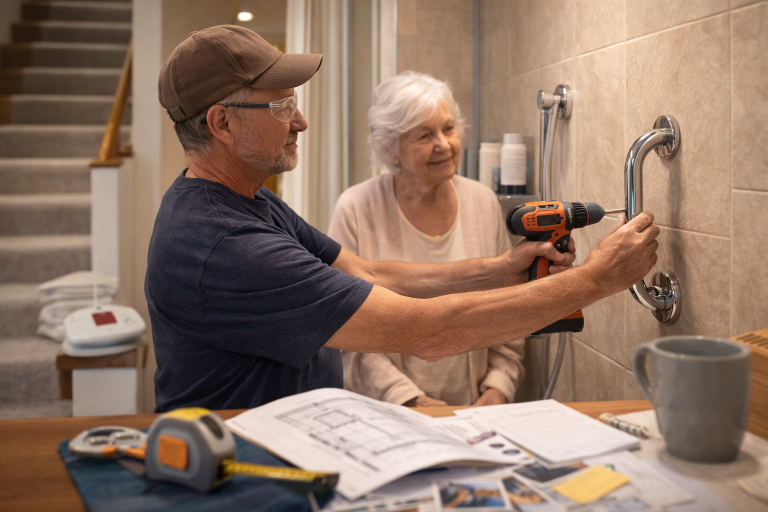
A home safety evaluation is a room-by-room review of an older adult's home to identify fall hazards and everyday accessibility problems, such as stairs, bathrooms, thresholds, lighting and cluttered walkways. Next Chapter Home Transitions then provides a prioritized report so the family can decide what to change first.
-
Next Chapter Home Transitions, founded by Bruce Schneider, provides in-home home safety evaluations for older adults and their families in Suffolk County and across Long Island. Bruce is a Senior Home Safety Specialist (SHSS), a Senior Real Estate Specialist (SRES) and a Senior Transition Specialist.
-
With Next Chapter Home Transitions, the initial conversation is no-cost and the home safety evaluation costs $375.00. The fee includes a complete report in print and by email. All fees are explained before you schedule.
-
Families receive a room-by-room overview of concerns, prioritized findings, practical suggestions for changes to consider, photos documenting observations (with permission), and a next-step checklist that can be shared with family members or professionals. Some suggestions are simple, such as improving lighting or rearranging furniture. Others may call for a qualified contractor or healthcare professional.
-
No. It provides information about the home environment and identifies concerns or improvements to consider. Decisions about living arrangements may also require input from the older adult, family, physicians, therapists, care professionals and other appropriate advisors.
-
No. A traditional home inspection generally examines a property’s condition and major systems. A home safety evaluation focuses on how the living environment supports the needs, routines and safety of the person using it.
-
No. The report helps organize observations and priorities. Families can consider urgency, personal preferences, professional guidance, feasibility and budget before deciding what to implement.
-
It may help identify environmental questions that should be considered before someone returns home. It does not replace discharge instructions or an assessment by a physician, occupational therapist, physical therapist or other healthcare professional.
-
No evaluation or modification can eliminate every risk. The purpose is to identify environmental concerns and help families make informed decisions about possible improvements.
-
The family can review the priorities, identify actions it can manage and determine where additional professional help may be needed.
-
Many families begin thinking about transitions when they notice changes in a loved one’s health, safety, or ability to manage daily living tasks.
Some early signs include:
Difficulty managing medications
Increased falls or mobility challenges
Unpaid bills or financial confusion
Declining housekeeping or home maintenance
Isolation or loneliness
Difficulty cooking or grocery shopping
Memory loss or cognitive decline
These changes often happen gradually. Planning early allows families to explore options calmly and make thoughtful decisions rather than reacting during a crisis.
Next Chapter Home Transitions helps families evaluate the situation and identify the safest and most supportive next step.
-
Aging in place refers to a senior remaining in their own home safely and comfortably as they grow older.
For many families, this is the preferred option when possible. Aging in place can include:
Home safety modifications (grab bars, ramps, lighting)
In-home care assistance
Medication management support
Meal preparation services
Transportation assistance
Fall-prevention improvements
Our role is to help families determine whether aging in place is safe and sustainable, and to connect them with trusted professionals who can help make the home environment supportive.
-
There is often a point when remaining at home becomes difficult or unsafe despite best efforts.
Common indicators include:
Frequent falls
Wandering due to memory issues
Difficulty bathing or dressing
Poor nutrition or weight loss
Increasing medical needs
Caregiver burnout among family members
When these challenges arise, families may begin exploring assisted living, memory care, or skilled nursing care.
Next Chapter Home Transitions helps families assess the situation and navigate the options available.
-
There are several levels of care available depending on a senior’s needs.
Independent Living
Communities designed for active seniors who want social opportunities and maintenance-free living.
Assisted Living
Provides help with daily activities such as medication management, meals, and personal care while allowing residents to maintain independence.
Memory Care
Specialized care environments designed for individuals living with Alzheimer’s disease or other forms of dementia.
Skilled Nursing / Nursing Homes
Provide 24-hour medical supervision and care for seniors with significant medical needs.
Choosing the right level of care can feel overwhelming. We help families understand the differences and evaluate the best environment for their loved one’s safety and quality of life.
-
Long-term care can be funded through several different sources depending on the situation.
Common options include:
Personal savings or retirement assets
Long-term care insurance
Veterans benefits
Conversion of Life Insurance
Medicaid programs
Family contributions
Home equity loan
Home sale
Every family’s financial situation is unique. Through our professional network, we help connect families with trusted elder law attorneys, financial planners, and care advisors who can help explore the most appropriate strategies.
-
For many families, a loved one’s home is their largest financial asset.
When a senior moves to assisted living, memory care, or another care setting, selling the home can often provide the financial resources needed to pay for care while simplifying responsibilities for the family.
Next Chapter Home Transitions specializes in helping families:
Prepare the home for sale
Coordinate clean-out and transition services
Manage repairs and improvements
Market and sell the property
Reduce stress during an already difficult time
Our goal is to make the process simple, respectful, and supportive.
-
Next Chapter Home Transitions was created specifically to support families navigating aging-related housing decisions.
Our work extends far beyond listing and selling homes.
We help families:
Understand senior care options
Coordinate housing transitions
Connect with trusted care professionals
Prepare homes for sale with minimal stress
Navigate emotional and practical challenges
With specialized credentials including the Senior Real Estate Specialist (SRES®) designation and Senior Transition Specialist certification, we focus on guiding families through one of life’s most sensitive transitions with compassion and professionalism.
-
The best time to reach out is before a crisis occurs.
Early conversations allow families to:
Understand available care options
Explore financial strategies
Create a thoughtful transition plan
Reduce stress during emergencies
Even if a move is months or years away, planning ahead can provide peace of mind for both seniors and their families.
-
We provide guidance and support throughout the entire transition process.
Our services include:
Senior housing transition guidance
Aging-in-place planning
Home preparation and sale coordination
Connections to trusted care professionals
Support for families navigating difficult decisions
Most importantly, we approach every family situation with patience, empathy, and respect.
-
Many families reach a point where they realize their loved one may need more support than they can safely provide at home. These situations often bring emotional and practical challenges.
You may benefit from speaking with Next Chapter Home Transitions if:
A parent is struggling to maintain their home
Care needs are increasing
You are considering assisted living or other care options
A home may need to be prepared for sale
Your family needs guidance navigating the next step
We help families evaluate options, coordinate resources, and manage the housing transition process with compassion and clarity.
Our goal is to help families move forward confidently into the next chapter.