
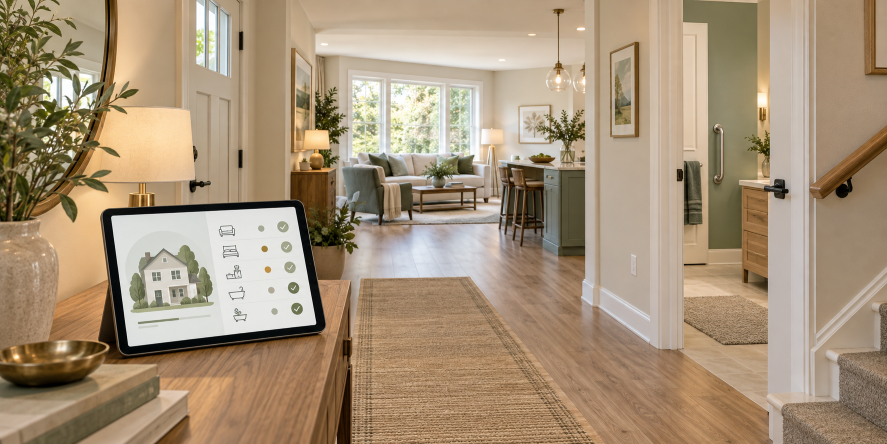
Home Safety Evaluations for Aging in Place
When someone wants to remain at home, families often wonder whether the home still supports that goal. Some concerns are obvious. Others—such as poor lighting, difficult thresholds, unstable handholds or inconvenient storage—can be easy to overlook.
Next Chapter Home Transitions provides compassionate, structured home safety evaluations supported by the Cocoon System. The evaluation helps families identify concerns, understand possible improvements and organize next steps without pressuring an older adult or making decisions for them.
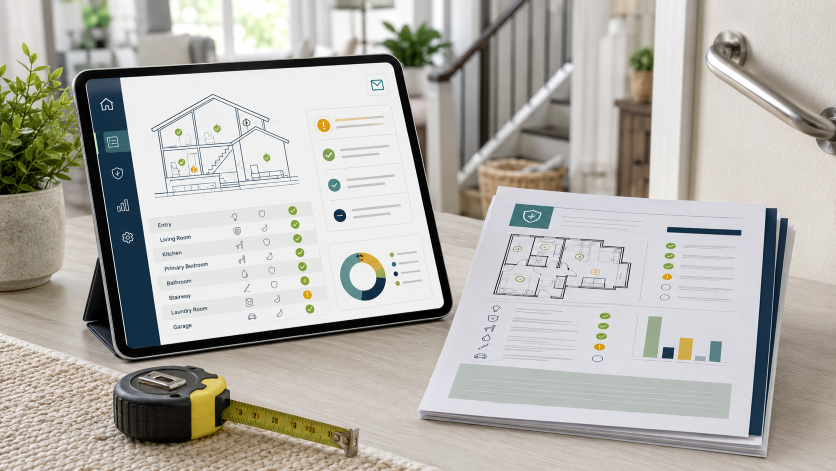
What Happens During a Home Safety Evaluation? A Family Guide to the Cocoon System
A Cocoon System home safety evaluation gives families a structured, room-by-room way to identify concerns, prioritize improvements and support safer, more confident aging in place.

Next Chapter Home Transitions Announces a New Association with Cocoon System: A Better Way to Support Aging in Place
For many older adults, the wish to remain at home is about much more than avoiding a move. Home represents independence, familiarity, community, memories and control over daily life. But wanting to age in place and being properly prepared to do so are not always the same thing.
A home that worked well for decades can become harder to navigate as balance, strength, vision, mobility or health needs change. A loose rug, poor lighting, an awkward step, a difficult door handle or an inaccessible bathroom may seem like a small concern—until it contributes to a fall, an injury, a hospitalization or a sudden loss of independence.
That is why Next Chapter Home Transitions is pleased to announce a new association with Cocoon System, an innovative home-safety evaluation platform created to help older adults, families and the professionals who serve them identify risks, understand priorities and make more informed aging-in-place decisions.
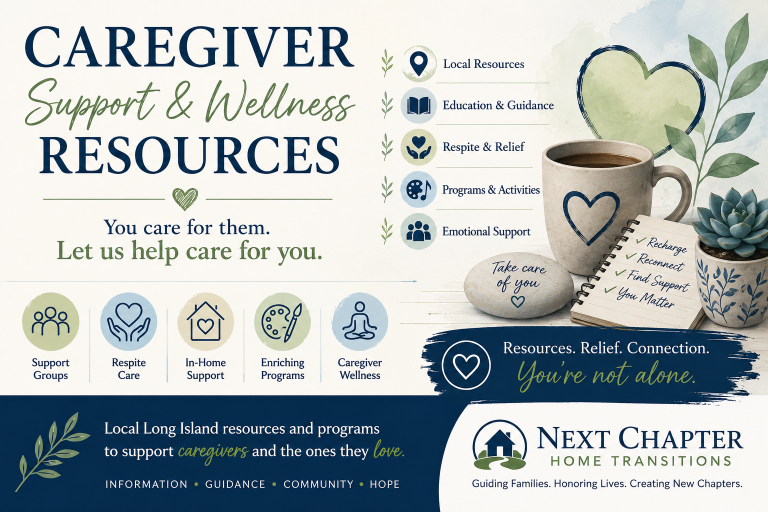
Caregiver Support & Wellness Resources
Caring for an aging parent, spouse, or loved one is a journey filled with compassion, commitment, and difficult decisions. While many family caregivers focus entirely on the needs of the person they're supporting, it's just as important to recognize that caregivers need care too. Whether you're helping someone remain safely at home, navigating Alzheimer's disease or another form of dementia, coordinating medical appointments, or exploring long-term care options, having access to the right support can make an enormous difference for everyone involved.
Long Island offers a wealth of caregiver resources designed to reduce stress, prevent burnout, and improve quality of life. From caregiver support groups and respite care to Alzheimer's education, adult day programs, art and music therapy, Memory Cafés, and in-home assistance, families have more help available than they often realize. This guide brings together many of the trusted organizations and programs serving Nassau and Suffolk Counties, helping you find the information, encouragement, and local connections you need to confidently navigate your family's next chapter.

Selling Smart: From Closing Day to Moving Day—Finishing Your Move with Confidence
For many homeowners, accepting an offer feels like crossing the finish line.
In reality, it's the beginning of the final—and often busiest—stage of your move.
Between signing the contract and receiving the keys to your next home, there are dozens of important details to coordinate. Missing a deadline or overlooking a simple task can add unnecessary stress during an already emotional time.
Learn what happens before, during, and after closing, including packing, moving, utility transfers, final walkthroughs, and settling into your new home with confidence.

Selling Smart: Understanding Offers Beyond the Purchase Price
Many sellers assume the highest purchase price is automatically the best offer, but experienced real estate professionals know that financing, contingencies, buyer qualifications, and closing timelines can be just as important to a successful sale.

Selling Smart: Creating the Perfect Showing Experience
Professional photography has captured your home's best features, and your marketing campaign is generating interest.
Now comes one of the most important moments in the selling process—the showing.
Every showing is an opportunity for a buyer to imagine living in your home. While online photos create interest, it's the in-person experience that often transforms curiosity into an emotional connection.
Discover practical tips for preparing your home for showings. Learn how cleanliness, lighting, flexibility, and presentation can attract buyers, generate stronger offers, and help your home sell faster.
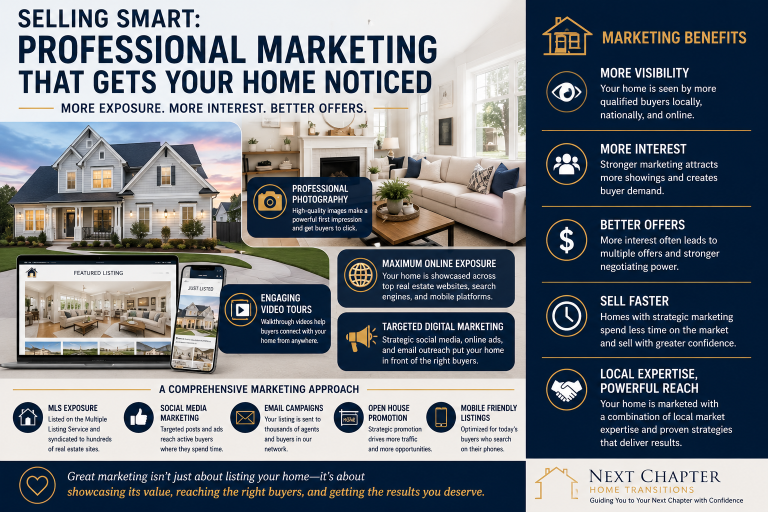
Selling Smart: Professional Marketing That Gets Your Home Noticed
In today's real estate market, simply placing a home on the Multiple Listing Service (MLS) is no longer enough. Most buyers begin their search online, often viewing dozens of homes before deciding which ones are worth visiting in person.
That means your home's first showing usually happens on a computer, tablet, or smartphone.
Professional marketing is what transforms a well-prepared home into one that captures attention, generates excitement, and encourages buyers to schedule a showing.
At Next Chapter Home Transitions, working in partnership with Weichert Realtors Performance Homes, we use a comprehensive marketing strategy designed to maximize your home's exposure and attract qualified buyers from the very first day your home enters the market.

Selling Smart: Preparing Your Home for Maximum Buyer Appeal
When it comes to selling a home, buyers aren't just purchasing square footage—they're imagining their future. They picture family dinners in the dining room, relaxing evenings in the living room, and holiday celebrations with loved ones. The easier it is for buyers to picture themselves living in your home, the more emotionally connected they become.
That's the purpose of home staging.
Staging isn't about making your home look expensive or pretending no one lives there. It's about presenting your home in its best light so buyers can appreciate its space, functionality, and potential.
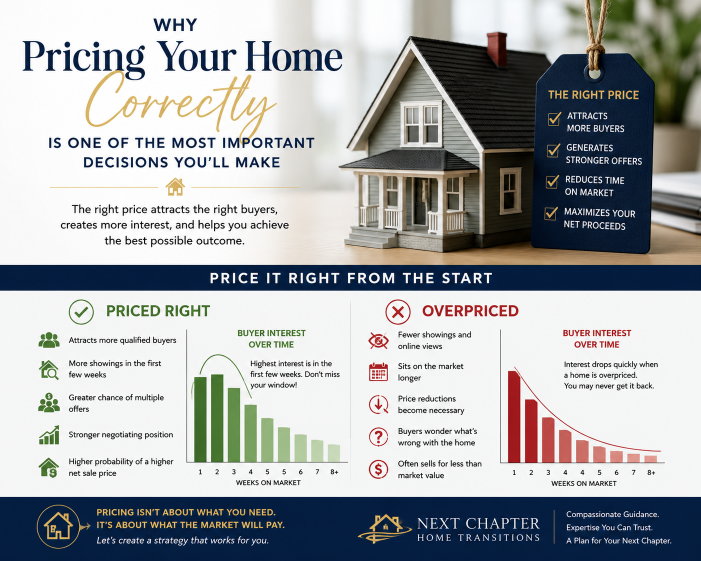
Selling Smart: Why Pricing Your Home Correctly Is One of the Most Important Decisions You'll Make
When it comes to selling a home, one of the biggest misconceptions is that you should "price it high and see what happens." It may sound like a safe strategy—you can always lower the price later, right?
In reality, the opposite is often true.
The asking price is one of the most powerful marketing tools available when selling your home. Price it correctly from the beginning, and you'll attract more qualified buyers, generate greater interest, and often achieve a stronger final sales price. Price it too high, and your home may sit on the market, become overlooked by buyers, and ultimately sell for less than it might have with a well-planned pricing strategy.
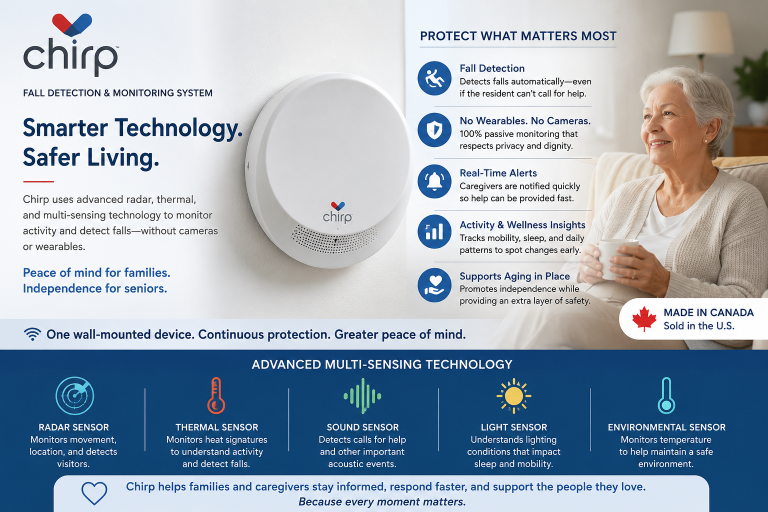
A New Approach to Fall Detection: How Chirp May Help Seniors Stay Safe at Home
Falls are one of the leading causes of injury, hospitalization, and loss of independence among older adults. According to the Centers for Disease Control and Prevention (CDC), millions of adults age 65 and older experience a fall each year, and many of those falls can have life-changing consequences.
Learn how the Chirp Fall Detection System uses radar and thermal sensing technology to help protect seniors aging in place or living in senior communities—without cameras or wearable devices.
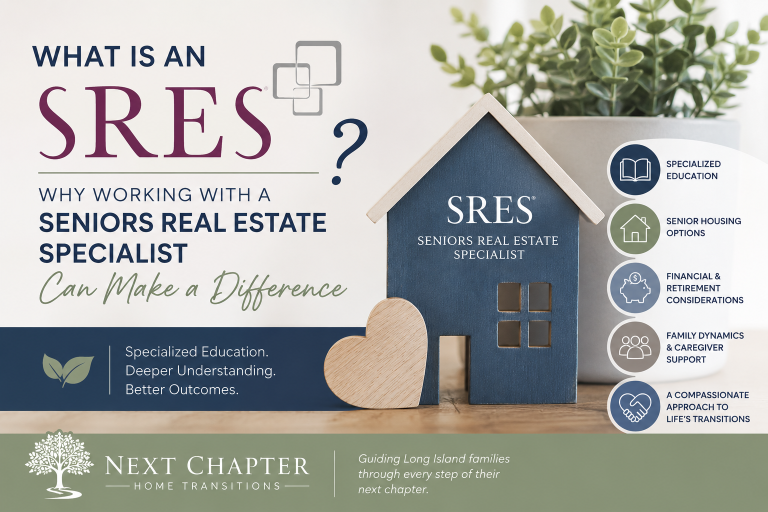
What Is an SRES®? Why Working With a Seniors Real Estate Specialist Can Make a Difference
When families are helping an aging parent decide whether to age in place, downsize, move closer to family, or transition to a senior living community, they often discover that the decision involves much more than simply selling a home.
A REALTOR® with the SRES® (Seniors Real Estate Specialist) designation has completed specialized education through the National Association of REALTORS® focused on the unique financial, emotional, and housing challenges facing older adults and their families.
In our latest blog, we explain what the SRES® designation is, what it takes to earn it, and why working with an SRES® can make a meaningful difference when navigating a major life transition.