
Resources
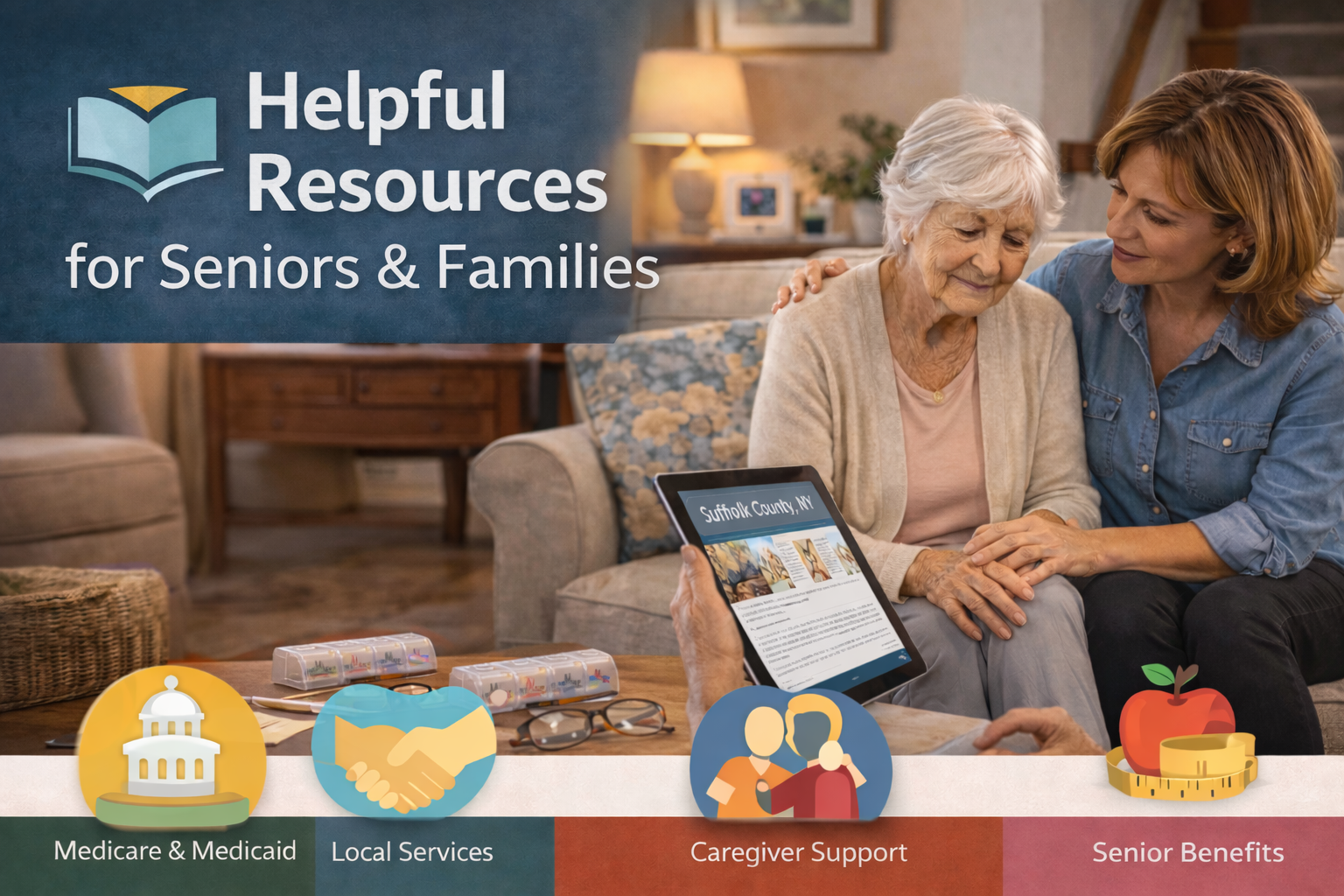
Helpful Resources for Seniors and Families
Navigating the challenges of aging can feel overwhelming for seniors and their families. Fortunately, many trusted organizations provide valuable information, support programs, and financial assistance resources.
The following organizations offer reliable guidance on topics such as healthcare coverage, caregiver support, financial benefits, aging services, and local programs available to older adults. These resources are intended to help families better understand their options and connect with services that support independence, safety, and quality of life.
Navigating senior care decisions can feel overwhelming. Please visit our Family Resource Library for more information and useful resources. This free guide highlights trusted organizations that provide healthcare information, caregiver support, aging in place guidance, financial assistance, selling a family home and local aging services for families in Suffolk County.
National Organizations for Seniors
National Council on Aging (NCOA)
The National Council on Aging is one of the leading nonprofit organizations dedicated to improving the health and financial security of older adults. NCOA provides tools, education, and advocacy programs that help seniors access benefits, improve wellness, and remain independent.
Their BenefitsCheckUp® tool helps older adults identify programs that may assist with costs such as healthcare, prescriptions, food, housing, and utilities.
Helpful topics on the site include:
Benefits and financial assistance
Healthy aging programs
Caregiver support
Falls prevention resources
Medicare
Medicare is the federal health insurance program for people age 65 and older and for certain younger individuals with disabilities. The official Medicare website offers comprehensive information on coverage options, enrollment periods, prescription drug plans, and supplemental insurance policies.
Families can use the site to:
Compare Medicare plans
Learn about Medicare Advantage and Part D
Understand eligibility and enrollment timelines
Find providers and coverage information
Medicaid
Medicaid provides health coverage and long-term care support for eligible individuals with limited income and resources. The program plays a major role in helping seniors pay for long-term care services such as nursing homes and certain home care programs.
The Medicaid website offers guidance on:
Eligibility requirements
Long-term care coverage
State Medicaid programs
Application and enrollment information
Local Resources for Suffolk County Seniors
Suffolk County Office for the Aging
🔗 https://suffolkcountyny.gov/aging
The Suffolk County Office for the Aging is the designated Area Agency on Aging responsible for coordinating services for residents age 60 and older. The agency administers federal, state, and local programs designed to help seniors maintain independence and dignity.
Programs and services may include:
Caregiver support programs
Home-delivered meals
Senior advocacy services
In-home care programs
Benefits assistance and counseling
These services are designed to help older adults remain safe and supported within their communities.
Destination:Accessible
🔗http://destinationaccessible.com
The goal of Destination:Accessible is to provide the information anyone with a mobility challenge needs to make an informed decision as to whether or not a destination is appropriate for him/her, and what to expect when you get there. They don’t want to tell you where to go. They want you to “know before you go” to ensure the best experience possible
Remember: The information listed on www.destinationaccessible.com is based on personal experiences on the specific date of the visit. If you find that things are not as we described them, we apologize. Venue’s may have been updated, renovated, or changed in some other fashion. We hope that our visitors would apprise us of the changes so that we can return and update the information on the website.
Caregiver Support & Education
Eldercare Locator
Eldercare Locator is a national service that connects familieswith local aging resources, including Area Agencies on Aging, transportation programs, caregiver support services, and senior housing options.
This service helps families quickly locate trusted assistance in their local communities.
Family Service League – Senior & Caregiver Support
Family Service League provides counseling, education, and support programs for caregivers of aging family members. Services include individual counseling, support groups, and caregiver education designed to reduce stress and improve caregiving outcomes.
Nutrition & Wellness Programs
Meals on Wheels America
🔗 https://www.mealsonwheelsamerica.org
Meals on Wheels programs deliver nutritious meals to seniors who may have difficulty preparing food or leaving their homes. In addition to nutrition support, these programs provide social connection and wellness checks for older adults living independently.
Government Aging Services
Administration for Community Living (ACL)
ACL supports programs that help older adults and people with disabilities live independently in their homes and communities. Many services funded through the Older Americans Act include caregiver support, nutrition programs, transportation assistance, and health promotion services.
Planning the Next Chapter
While the organizations above provide valuable information and support programs, families often need guidance when housing transitions become necessary.
Next Chapter Home Transitions helps families navigate the housing and real estate aspects of senior transitions — including preparing a home for sale, coordinating resources, and helping families move forward with confidence during life’s next chapter.
To learn more or schedule a confidential conversation, contact: Next Chapter Home Transitions by email at info@nextchapterhometransitions.com or call us at 631 459-3348.
Senior Safety Resources
Helping Families Protect What Matters Most
As families help aging loved ones navigate the next chapter, safety becomes just as important as care planning.
From financial scams to medication risks and home hazards, small issues can quickly become serious challenges. This resource center is designed to give you clear, practical guidance so you can protect your loved one—and make confident decisions along the way.
Financial Safety & Scam Prevention
Protecting seniors from fraud and financial exploitation
Older adults are increasingly targeted by scams—from phone calls and emails to identity theft and financial manipulation. Many of these schemes are sophisticated and difficult to detect, even for vigilant families.
Staying informed is one of the most effective ways to protect your loved ones. We’re grateful to share this trusted resource provided by Jimmy Tepper, Outreach Director at Class Action U. It outlines the most common scams affecting seniors today and how to recognize warning signs early. Common Senior Scams & How to Protect Your Loved Ones
Medication Safety
Reducing risks from missed doses, confusion, and polypharmacy
As medication routines become more complex, the risk of mistakes increases. Missed doses, incorrect timing, and drug interactions can all impact a senior’s health and safety.
Families should be aware of:
Confusion around prescriptions
Changes in behavior or alertness
Multiple medications interacting with each other
Signs that a loved one may need help managing medications
For More Information: Medication Risks for Seniors Living Alone
Home Safety
Making the home safer for aging in place
For many seniors, home is where they feel most comfortable—but it can also present hidden risks. Falls are one of the leading causes of injury among older adults, often due to simple hazards.
Key areas to watch:
Stairs and uneven flooring
Bathroom safety (tubs, showers, grab bars)
Poor lighting
Clutter and trip hazards
Understanding when a home is no longer safe is a critical step in protecting your loved one.
For more information: 10 Warning Signs an Aging Parent Should Not Live Alone
Care Decision Safety
Recognizing when more support is needed
Safety isn’t just about physical risks—it’s also about knowing when a loved one may no longer be able to live independently.
Common warning signs include:
Missed medications
Memory issues or confusion
Unsafe driving
Poor nutrition or hygiene
Frequent falls or hospital visits
These signs often appear gradually, making them easy to overlook—until a crisis occurs.
For more information: When a Parent Needs Long-Term Care: What Families Wish They Knew Sooner
Family Planning & Legal Preparedness
Protecting your loved one—and your family—before a crisis
One of the most important aspects of safety is preparation.
Having the right conversations and documents in place can prevent confusion, delays, and difficult decisions during stressful moments.
Important considerations include:
Power of attorney
Health care proxy
Emergency contacts
Financial and care preferences
Planning ahead ensures your loved one’s wishes are honored—and reduces stress for everyone involved.
You Don’t Have to Navigate This Alone
Protecting an aging loved one can feel overwhelming—but having the right information makes all the difference.
At Next Chapter Home Transitions, we help families across Suffolk County navigate the complex decisions around safety, care, and housing with clarity and confidence.
Need Guidance for Your Family’s Situation?
Whether you’re planning ahead or facing urgent decisions, we’re here to help.
Next Chapter does not charge families for its initial education, transition-planning guidance, or introductions to trusted resources. Real estate brokerage services and services provided by independent partner professionals may involve commissions or fees, which will be explained by the applicable provider before any commitment is made.
Contact Next Chapter Home Transitions
What other resources are available for seniors in Suffolk County?
Seniors in Suffolk County have access to services such as caregiver support programs, meal delivery, transportation assistance, healthcare benefits counseling, and housing resources through organizations like the Suffolk County Office for the Aging and national senior support organizations.
How can seniors get help paying for healthcare?
Programs such as Medicare and Medicaid provide healthcare coverage and long-term care support for eligible seniors. The National Council on Aging also offers tools that help seniors find financial assistance programs.
Where can families find local senior services?
Families can contact the Suffolk County Office for the Aging or use Eldercare Locator, a national service that helps connect seniors and caregivers with local aging support programs.
What services help seniors remain independent at home?
Programs such as Meals on Wheels, caregiver support services, transportation programs, and home safety assistance help seniors maintain independence and safety while aging in place.