

Helping Families Stay Informed: Senior Cancer Risks and Mesothelioma Warning Signs
At Next Chapter Home Transitions, we believe families deserve access to trusted information when navigating the complex health and housing challenges that can accompany aging and serious illness. We are pleased to share resources from the Mesothelioma Center, an organization dedicated to education, advocacy, and support for individuals and families affected by asbestos-related diseases. Their articles provide valuable guidance on understanding mesothelioma, caregiving considerations, treatment resources, and financial support options that may help families facing difficult medical transitions. We encourage our readers to explore these important educational resources as part of making informed care decisions for loved ones.

Helping Seniors Transition with Confidence: How a Reverse Mortgage Can Be a Powerful Financial Tool
As a Senior Transition Specialist serving the Suffolk County area, one of the most important parts of helping older adults and their families is making sure they have access to the financial resources they need during life’s major transitions. Whether a senior is downsizing, moving into assisted living, receiving home care, or simply trying to age comfortably in place, finances are often one of the biggest concerns.

Why Asset Recovery Matters for Families in Transition
Life transitions can be emotional, overwhelming, and financially complex. Whether a family is helping aging parents downsize, managing the estate of a loved one, navigating probate, relocating, or recovering after financial hardship, important financial details are often overlooked during the process.
Our partners at National Asset Services understand that these moments involve far more than paperwork and logistics. Families are often balancing emotional stress, legal responsibilities, and major life decisions all at once. That’s why they believe asset recovery is more than a financial service; it’s a valuable resource that can help families regain funds that may rightfully belong to them during critical times of transition.

Does Medicare Cover Long-Term Care? What Families Need to Know
The Question Almost Every Family Asks
When a parent begins to need help—whether after a fall, hospitalization, or gradual decline—one of the first questions families ask is:
“Will Medicare cover this?”
It’s a reasonable question. After all, your loved one has paid into Medicare for years.
But the answer often comes as a surprise.
👉 Medicare does NOT cover most long-term care.
And misunderstanding this can lead to rushed decisions, unexpected costs, and unnecessary stress.
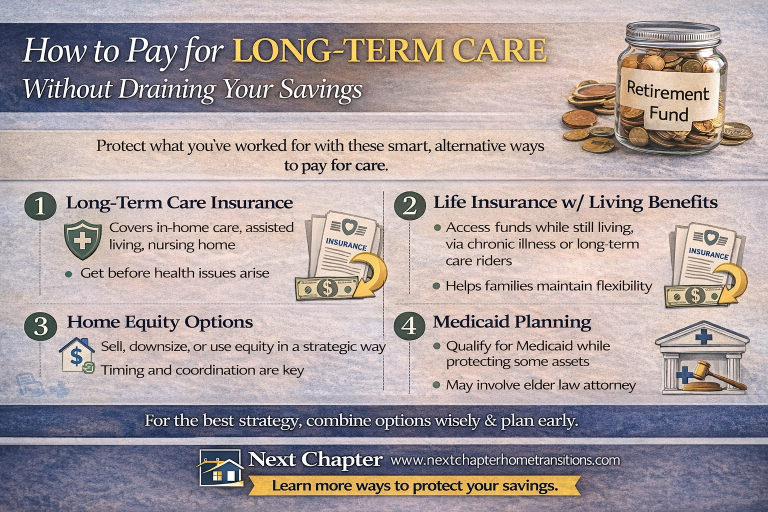
How to Pay for Long-Term Care Without Draining Your Savings
Worried about long-term care costs? Learn how families can pay for care without draining savings using smart strategies and planning options.

When a Parent Needs Long-Term Care: What Families Wish They Knew Sooner
There’s a moment most families aren’t prepared for.
It rarely begins with a crisis.
Instead, it starts quietly—missed medications, a fall, growing confusion, or the realization that living alone is no longer safe.
And in that moment, something shifts.
You’re no longer just a son or daughter.
You’ve become the decision-maker.

Senior Abuse Prevention: How Families Can Protect Aging Loved Ones
As families navigate the emotional journey of caring for an aging parent, one of the most important—and often overlooked—responsibilities is protecting them from abuse and neglect.
Whether a loved one is aging at home, receiving in-home care, or living in assisted living or a nursing facility, understanding the risks—and how to prevent them—can make all the difference in preserving their dignity, safety, and quality of life.

Medication Risks for Seniors Living Alone | Polypharmacy & Senior Safety
Polypharmacy refers to the use of multiple medications at the same time, typically defined as five or more prescription drugs taken concurrently.
While medications can improve quality of life, polypharmacy can also create serious health risks for seniors if medications are not carefully managed.
For families helping aging parents navigate health and care decisions, understanding the risks of polypharmacy is very important.
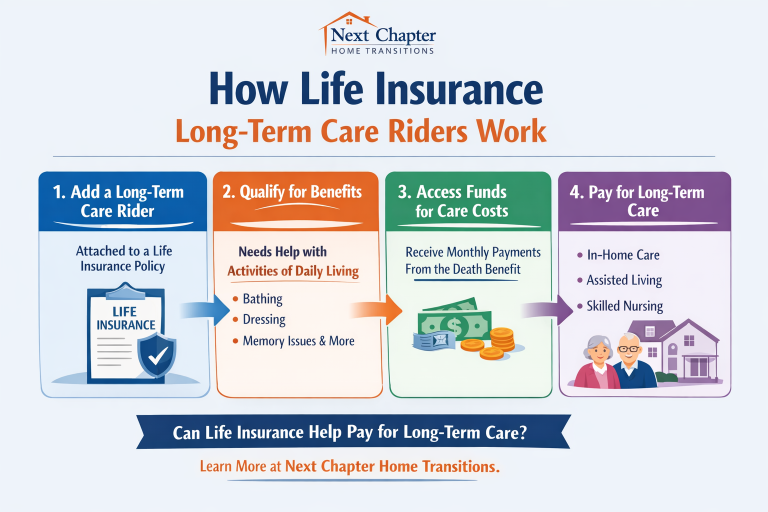
Using Life Insurance to Pay for Long-Term Care
One of the biggest concerns families face when helping an aging parent or loved one is how to pay for long-term care.
Many families assume their only options are savings, selling a home, or qualifying for Medicaid.
However, there is another option that many people do not realize they may already have:
Using a life insurance policy to help pay for long-term care.
At Next Chapter Home Transitions, we help families explore the full range of financial resources available to support senior transitions — including ways to use life insurance to pay for long-term care.

Our Mission and Purpose
Our mission is to guide Suffolk County families through important housing changes with clarity, compassion, and trusted expertise. Whether safely aging in place, transitioning to senior living, downsizing, relocating closer to family, or preparing a property for sale, we coordinate every step with professionalism, strategy, and care. We provide our service at no charge to the family.

Transitions are rarely just about the home
For many Long Island families, they’re about navigating one of the most emotional seasons of life — helping aging parents safely aging in place or move from a longtime home into the right next living environment. That’s why we created Next Chapter Home Transitions.

Aging in Place
While the concept is appealing, aging in place typically requires planning and support to ensure safety and sustainability.
Common elements include:
Home safety modifications
In-home care services
Healthcare support
Technology solutions